Medical Device Components Machined in Vietnam: What Rules Apply and What to Ask For
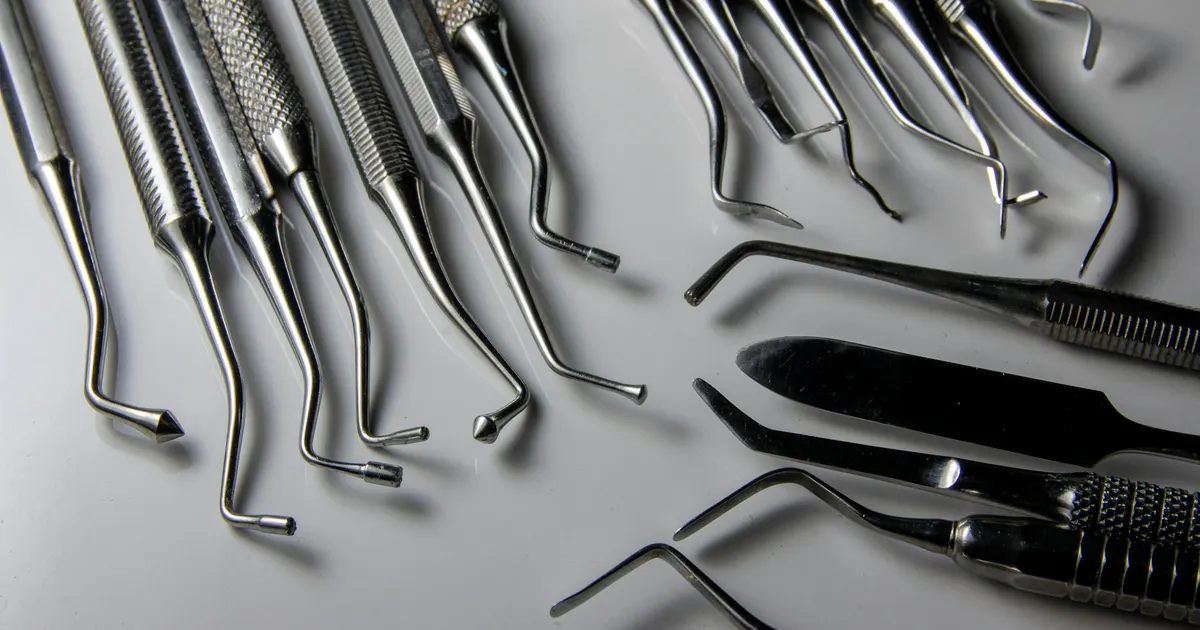
Medical parts are machined in many countries, and Vietnam has shops that make them, mostly instruments, housings, fixtures and components for diagnostic and laboratory devices. The cutting is the same as any other precision work. What differs is the paperwork, the control of materials and processes, and who carries the responsibility. This guide sets out what applies and what to ask, without claiming any approval that a shop must prove for itself.
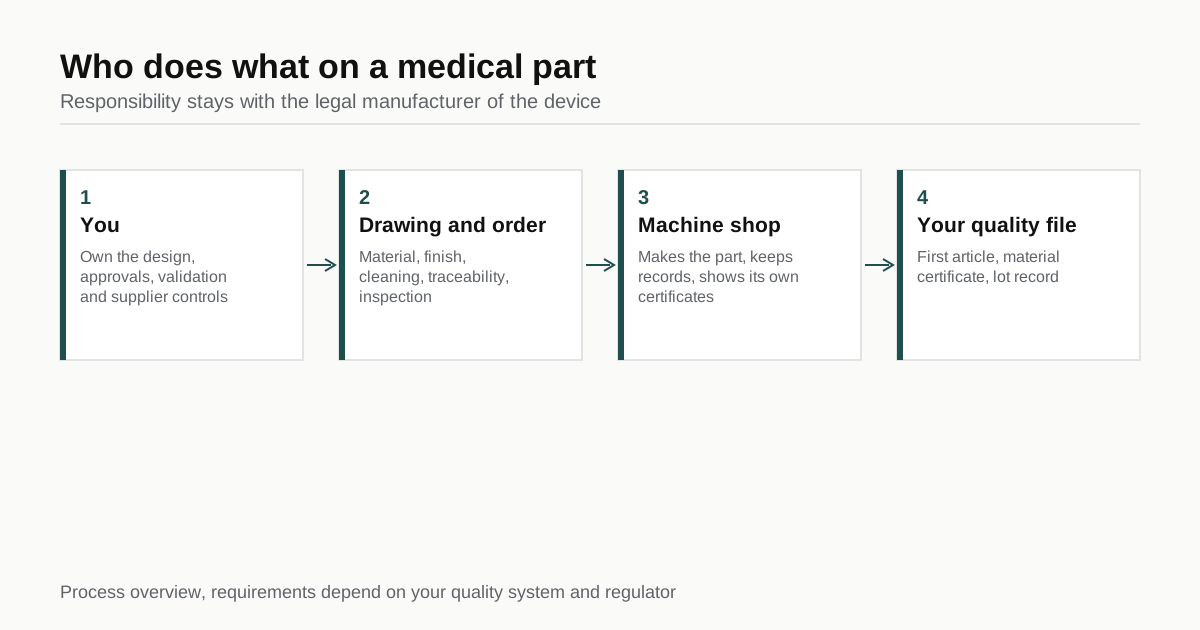
Who is responsible for what
Regulators in the United States, Europe, Japan and South Korea hold the legal manufacturer of the finished device responsible. That is normally you, the company whose name is on the device. A machine shop supplies a component to your drawing and your purchasing conditions. It does not register the device and does not carry your approvals.
This site is a sourcing service. It shortlists up to three shops for your drawing and, if you ask, audits a shop and follows the order. It does not make parts or certify anything: an audit report records what we saw on the day, not a quality system approval. Evidence about a shop’s quality system comes from the shop, and you check it.
For you this means three things:
- Your quality system decides how you qualify a supplier
- The drawing and order must state every requirement the part must meet
- The shop must provide records that your system can file
Quality system standards
ISO 13485 is the international standard for quality management systems of medical device organisations. Some machine shops in Vietnam are certified to it, and many are not. The right question is not whether a shop is certified but what your own supplier controls require for this part.
A reasonable approach:
- For implants and parts in direct patient contact, most device makers require a supplier with a documented quality system and often ISO 13485, plus an audit
- For instrument parts, housings and fixtures, a controlled supplier with documented inspection, traceability and a change process may be sufficient
- For prototypes, the shop’s normal quality practice with a first article report is usually enough
If a shop states that it holds a certificate, ask for the copy, the scope and the name of the issuing body, and check it with the issuer. A certificate that does not cover machining, or has expired, is not evidence. No shop should be described as certified by anyone but the shop and its certification body.
Materials for medical parts
Material grades for medical use come with standards:
| Material | Typical standard | Typical use |
|---|---|---|
| Stainless steel 316L | ASTM F138 for implants, ASTM A276 for bar | Instruments, housings, some implants |
| Stainless steel 17-4 PH | ASTM A564 | Instruments, springs, surgical tools |
| Titanium Ti-6Al-4V ELI | ASTM F136 | Implants, instruments |
| Cobalt chromium alloy | ASTM F1537 | Joint implants |
| PEEK | ASTM F2026 for implant grade | Spacers, handles, radiolucent parts |
| POM, PC and others | Supplier medical grade data | Handles, housings, disposable parts |
State the grade, the standard and the condition on the drawing, and ask for a mill certificate for each lot. Do not assume that a general industrial grade meets an implant specification. The stainless guide explains the difference between grades of stainless steel, and the mill test certificate guide shows how to check the paper.
Traceability
Medical work depends on being able to find out what went into a part. The usual chain is:
- Material heat number on the certificate
- A lot or batch number assigned by the shop
- The lot number on the traveller, the inspection record and the packing list
- For some parts, individual marking, often by laser, with a code you define
Ask the shop to keep records for a stated period, which your quality system sets. Some device regulations require records for the life of the device plus a number of years. Write the retention period into your supplier agreement.
Cleanliness and finish
Medical parts must be clean, and cleaning is a process, not a hope. Typical requirements:
- Removal of cutting fluid and machining debris before packing
- Deburring to a stated edge condition, as the deburring guide describes
- Surface finish, often Ra 0.4 micrometres or finer on implant surfaces and bearing faces
- Passivation of stainless steel, for example to ASTM A967, and sometimes electropolishing
- Packing in clean bags or trays, sometimes under controlled conditions
Cleanliness for parts that will later be sterilised is the buyer’s responsibility to define, because the device maker validates cleaning and sterilisation on the finished product. A shop’s cleaning step supports that validation and does not replace it.
Special processes
Heat treatment, passivation, anodizing, plating, welding and cleaning are special processes, meaning that the result cannot be fully checked by inspecting the product. Device makers usually require that such processes are validated, with documented limits and records. If a shop sends parts to another company for finishing, that company becomes part of your supply chain. Ask who performs each outside process and whether it is controlled in the same way. The anodizing guide describes how finishing is usually arranged in Vietnam.
Inspection and first article
For medical parts, inspection is normally more demanding than for general parts. Typical expectations:
- Full first article inspection on the first lot, with each dimension on the drawing recorded
- Critical dimensions flagged on the drawing and inspected on a stated sample, often each part
- Calibrated gauges and measuring equipment, with calibration records available on request
- A certificate of conformance with each shipment
- Control of non-conforming parts, with notification to you before shipping
The first article inspection guide and the CMM report guide explain how to read the reports. Write the inspection requirement into the order, because shops quote what the order states.
Instruments, implants and the level of control
Not every medical part carries the same risk. A handle for a surgical instrument, a housing for a laboratory analyser and a bone screw sit at very different levels. Regulators classify devices by risk, and your quality system sets supplier controls to match. As a rule of thumb, controls rise with patient contact and with the consequence of failure.
For low-risk parts such as housings, brackets and fixtures, a shop’s ordinary quality practice with a first article report and a material certificate often suffices. For instruments that touch tissue, add cleaning, passivation and traceability. For implants, expect full validation of special processes, tight material control, surface finish at the micrometre level and audited suppliers. Tell the shop which level applies. A clear statement saves a shop from quoting a casual process for a controlled part, and saves you from paying for implant-level control on a bracket.
Samples, pilot lots and the first order
For a first medical order, a sample lot of 5 to 20 parts with a full inspection report lets you test fit, finish and documentation before committing. Review the sample against the drawing, check the paperwork, and ask your quality team whether the supplier file is complete. Only then release a pilot lot. The prototype to production guide describes the step, and for medical parts the pilot lot also serves as evidence for your own process validation. Keep the sample and the reports in your file.
Change control and confidentiality
Change control and confidentiality
Changes to material, process, tooling or location must be agreed in writing before they happen, because a change can invalidate your approvals. State this in the supplier agreement: no change without written approval, and notice of changes to subcontractors. For confidential designs, ask for a non-disclosure agreement before sending drawings. NDA on request is part of how this site handles RFQs.
What to put in the RFQ
- The drawing with critical features marked
- Material grade, standard and certificate type
- Surface finish, cleaning and passivation requirements
- Marking and traceability requirements
- Inspection and report requirements
- Packaging and cleanliness expectations
- Quantity, and whether the order is a prototype, a pilot or a production lot
Be specific about what the part is used for, as far as confidentiality allows, so the shop can judge the level of control needed. Many shops are happy to make instrument parts and will say plainly if a requirement is beyond their system. A clear no is more useful than a vague yes.
Summary checklist
- Decide what your supplier controls require before you request quotes
- Ask each shop for its certificates and verify them
- State material grade, standard and certificate type
- Require lot traceability and a record retention period
- Define cleaning, passivation and packing
- Ask who performs outside processes
- Agree change control and an NDA in advance
Once your requirements are on paper, send the RFQ. Up to three shops in Vietnam will state what they can meet, and we reply within 24 business hours.
Frequently asked questions
Does a machine shop need ISO 13485 to make medical device parts?
The standard is written for medical device manufacturers and their quality systems. Whether a supplier needs it depends on your own system and your regulator. Many device makers require it for implant components and accept a controlled supplier audit for simple instrument parts. Ask your quality team what your supplier controls demand, then ask the shop for its certificate and verify it.
Who is responsible for regulatory compliance when parts come from a machine shop?
The legal manufacturer of the finished device carries the responsibility, not the machine shop and not a sourcing service. The shop supplies parts to your drawing and records. You decide the approvals, the validation and the biocompatibility testing of the finished device.
Which materials are common for machined medical parts?
Stainless steel 316L and 17-4 PH for instruments and housings, titanium Ti-6Al-4V ELI for implants and instruments, cobalt chromium for some implants, and PEEK, POM and other plastics for handles and spacers. State the grade and the standard for the intended use, and ask for the mill certificate.
Need a quote for a part like this?
Send the drawing. We shortlist up to 3 machine shops in Vietnam, manage the order if you want us to and reply within 24 business hours.
Send my RFQ